
The PlanAI Sequence: Turning One Idea into an Execution System
The fastest way to get real value from PlanAI is not to jump between features at random. It is to follow a sequence that turns curiosity into context, context into decisions, and decisions into work your team can execute.
Most people evaluate software by feature count. PlanAI is different. Its value appears when the platform is used as a sequence of decisions and capture points. You start by choosing an industry, because that choice shapes the examples, comparisons, and strategy language you will need later. The company selector is not just a filter. It is the opening move that gives every other action more relevance.
From there, the Discover feed becomes the second step in the workflow. It is where you activate your thinking with current articles, trends, and signals tied to the industry you picked. That matters because good planning rarely begins with a blank page. It begins with evidence. The feed gives you a reason to refine an idea, challenge assumptions, or see an opportunity you had not noticed before.
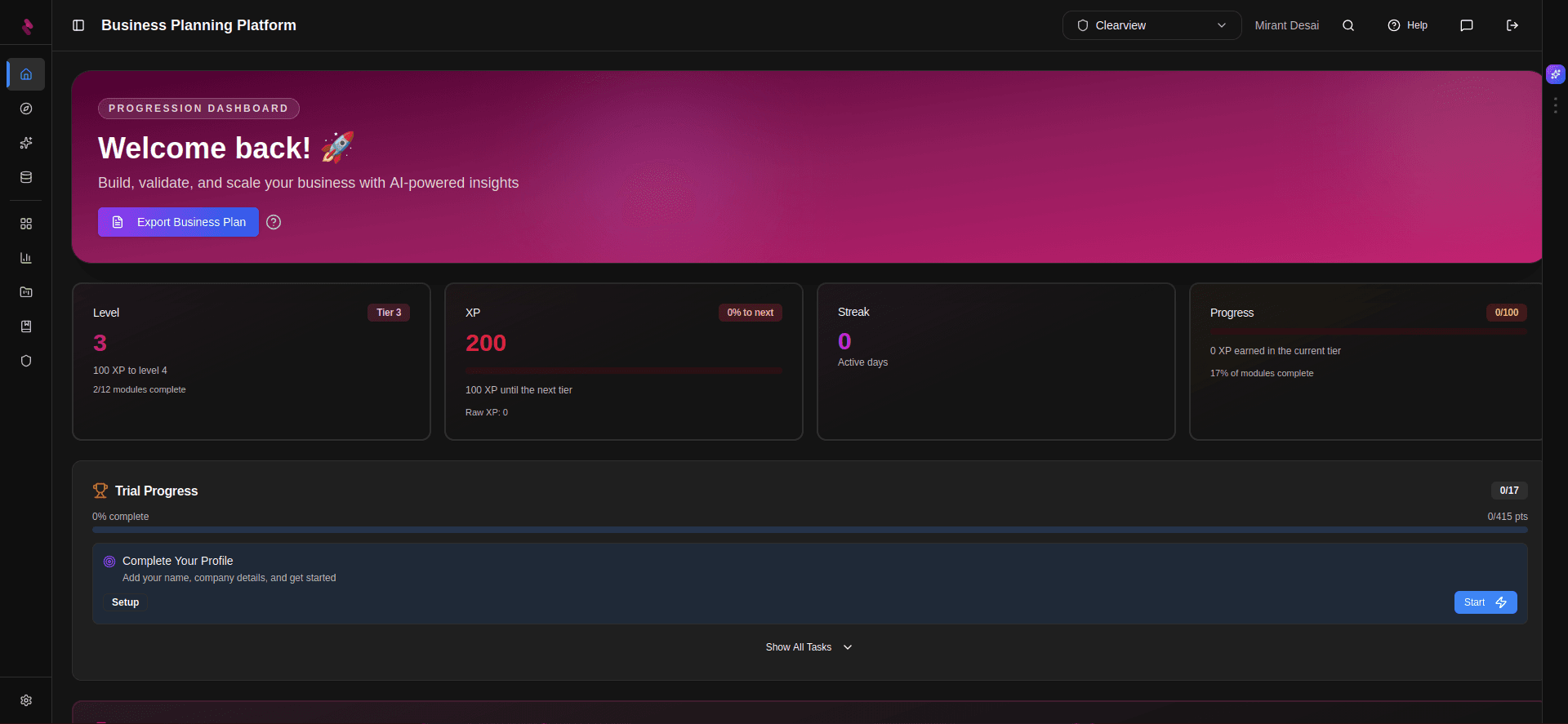
Let the assistant pressure-test the idea
Once you have a direction, the AI assistant should become your working partner. Use it to ask for perspective, not just answers. Push it to compare options, surface risks, and translate a rough concept into business language. The point is not to collect a clever response. The point is to make the idea sharper than it was before you started the conversation.
That assistant conversation is also where your knowledge system starts to matter. Artifacts from the discussion can be stored into knowledge so PlanAI has a better memory of what you are building, what assumptions you are holding, and what questions still need answers. In practice, that is how you start to train PlanAI's brain with your own work instead of treating each session like a reset.
Knowledge capture
Save research, decisions, and working assumptions so the platform can reuse them in later planning sessions.
Voice notes
Record quick thinking while it is still fresh, then turn that raw commentary into a traceable planning history.
Capture the work before it fragments
Voice notes, file uploads, and shared links are not support features. They are how you keep momentum when the work stops fitting neatly into one screen. Use voice notes to track progress and new ideas as they emerge. Store important files in the file repository so the team can share them by link instead of hunting through email or scattered folders. The more material that lives inside PlanAI, the less context gets lost between one decision and the next.
Documents and decks should not wait until the end of the process. They should emerge as soon as the thinking is stable enough to shape. That is where an early concept becomes a concrete product narrative, a draft pitch, or a first internal planning memo. Once those assets exist, the collaborative section brings them together in a workplan that other people can actually act on.
Move into execution with agents
The final step is to use the agents deliberately. Do not ask them for isolated outputs. Ask them to produce a workplan, pressure-test a business plan, and outline a quarterly roadmap that reflects the reality of your idea, your industry, and your available capacity. This is where PlanAI shifts from a thinking tool into an operating system for execution. The agents should not sit at the edge of the workflow. They should be the bridge between your research, your decisions, and your next three months of work.
The sequence, in plain terms
Choose an industry. Read the signals. Talk to the assistant. Save what matters. Record what you are thinking. Organize the files. Create the documents. Bring the team into the collaborative space. Then ask the agents to turn the whole body of work into a workplan, a business plan, and a quarterly roadmap.
That sequence is important because it reduces drift. Many tools help you brainstorm. Fewer help you preserve the result of that thinking long enough to do something useful with it. PlanAI is designed to keep the chain intact from first idea to visible execution. When used in that order, the platform compounds its value with every step instead of resetting your momentum.
The practical outcome is simple. You spend less time re-creating context, less time explaining your idea from scratch, and less time searching across disconnected tools for the latest version of the truth. The platform becomes a place where thinking is captured, organized, and converted into work. That is the real productivity gain.