Push Conversations into Notes as Markdown Artifacts
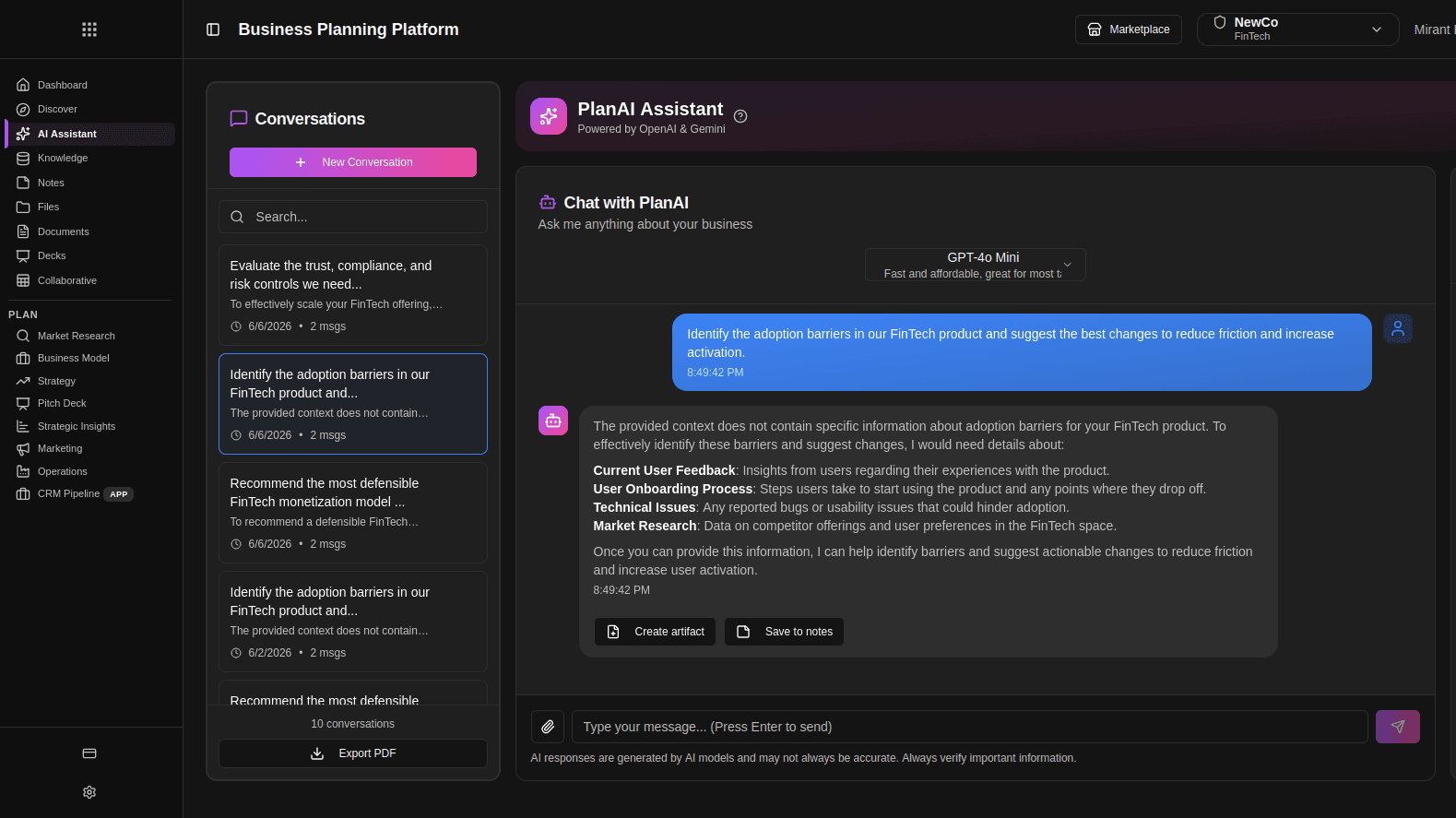
PlanAI conversations can now become durable working material. When an AI exchange produces useful strategy, research, decisions, or next steps, you can push it into Notes as a markdown artifact and keep it organized inside neatly grouped folders.
A strong AI conversation often contains more than a single answer. It may include customer language, market assumptions, pricing logic, feature tradeoffs, draft copy, or an operating plan that your team needs to revisit later. The problem is that conversations can be hard to reuse once they stay buried in a chat thread.
This update closes that gap. PlanAI now makes it possible to push conversations into the Notes section as markdown artifacts. Instead of manually copying responses into a separate document, users can preserve the useful parts of an exchange in a clean, readable format that belongs inside the same workspace as the rest of their planning material.
From chat output to reusable artifact
Markdown artifacts give conversation output a practical second life. A founder can turn a customer discovery discussion into a saved research note. A student team can preserve feedback from the assistant as a module artifact. A manager can save meeting preparation, risk analysis, or a decision memo without rebuilding the structure by hand.
Capture the useful exchange
Move valuable AI conversations out of the thread and into a persistent note artifact.
Keep markdown structure
Preserve headings, bullets, action items, and narrative flow in a format that remains easy to scan.
Group by folder
Keep related artifacts together by project, module, workflow, client, or planning milestone.
Notes become a working archive
The Notes section is no longer just a place for standalone writing. It becomes a working archive of the thinking that shaped the plan. Users can group artifacts into folders such as market research, product strategy, financial assumptions, customer discovery, classroom modules, operating plans, and investor updates.
That structure matters because the best planning work is cumulative. A pricing conversation from last week can inform this week's forecast. A saved competitive analysis can help shape a positioning memo. A set of AI-generated next steps can become the starting point for a collaborative workplan.
A cleaner handoff between thinking and execution
Conversation artifacts make it easier to hand work from the AI assistant to the broader PlanAI workspace. The chat captures exploration. Notes preserve the useful result. Folders make the result findable when the team needs to turn it into a document, plan, presentation, or action list.
Why markdown matters
Markdown keeps artifacts lightweight and portable. It supports the shapes people already use when working with AI: headings, sections, lists, checklists, tables, and short memos. That makes saved conversations easier to edit, summarize, share, and reuse across the rest of the business planning process.
- Research notes: save market signals, customer segments, competitor summaries, and discovery insights.
- Decision records: preserve why a team chose one strategy, channel, product direction, or assumption over another.
- Execution drafts: keep action plans, launch checklists, operating rhythms, and meeting follow-ups grouped by folder.
- Learning artifacts: collect AI-assisted explanations, module work, instructor feedback, and student project notes in a reviewable format.
Built for continuity
This feature is part of a broader PlanAI direction: reducing the distance between conversation, knowledge, documents, and execution. The assistant helps create insight. Notes help retain it. Grouped folders help teams return to the right material at the right moment.
For users building a company, teaching an entrepreneurship course, advising clients, or managing an internal initiative, that continuity is the difference between a useful answer and a useful operating asset.